The term “homeschooling teaching strategies” refers to approaches to teaching that can be used with home-educated students. Selecting the right strategy for individual students can positively impact the students’ learning and retention, thinking skills, motivation to learn, internalization of selected values, and development of constructive character traits. Although little research has been done specifically on homeschooling teaching strategies, homeschoolers can find research-based guidance from general education research literature and experience-based literature prepared by homeschoolers. This digest looks at several homeschooling teaching strategies. Continue reading
Tag Archives: Teaching Methods
Homeschooling Tangents
Do you ever find yourself going off an a tangent in terms of what you planned to study that day? This happens to most homeschoolers I know. They start off studying pollination and soon find themselves contemplating the equipment for beekeeping. Usually they make their way back to their original study plans before they actually order the beehive. Continue reading
Homeschooling Methods: Classical Education
Homeschooling and classical education originated with the publication of the Well Trained Mind by Susan Wise Bauer and Jesse Bauer in 1999. There are now curriculum companies devoted to just classical education, consultants who will help you plan your curriculum, and online classical education courses. Continue reading
Helping Your Child With Science
The following article is from the Office of Educational Research and Improvement which is part of the Department of Education.
THIS DIGEST WAS CREATED BY ERIC, THE EDUCATIONAL RESOURCES INFORMATION CENTER. FOR MORE INFORMATION ABOUT ERIC, CONTACT ACCESS ERIC 1-800-LET-ERIC
“Being “scientific” involves being curious, asking how things happen, and learning how to find the answers. Curiosity is natural to children, but they need help understanding how to make sense of what they see. All we need is a willingness to observe and learn with them, and, above all, to make an effort and take the time to nurture their natural curiosity.” Continue reading
Handwriting Instruction: What Do We Know?
There is increased emphasis on children’s writing today, but the emphasis is on writing stories and essays that demonstrate that children are learning to think. However, before children can write anything, they must learn printing or cursive handwriting. Despite the influence of new technologies, the computer and the word processor have not replaced the need to learn how to print or write. Continue reading
Don’t Become a Homeschool Dropout by Making This Single Mistake
Nearing the end of my active homeschooling career, I’ve been thinking about what advice I could pass on to new homeschoolers or those who have hit a bump in the road. I had some ideas based on talks I’ve done for new homeschoolers before but I thought I would look to see what other people have discovered to see if I was missing anything important. Continue reading
Curricula for Teaching About Fractions
The following article is from the Office of Educational Research and Improvement which is part of the Department of Education.
THIS DIGEST WAS CREATED BY ERIC, THE EDUCATIONAL RESOURCES INFORMATION CENTER. FOR MORE INFORMATION ABOUT ERIC, CONTACT ACCESS ERIC 1-800-LET-ERIC
by: Gayle M. Millsaps & Michelle K. Reed
February 1998 (Updated July 2002)
The study of fractions is foundational in mathematics, yet it is among the most difficult topics of mathematics for school students. Students have difficulty recognizing when two fractions are equal, putting fractions in order by size, and understanding that the symbol for a fraction represents a single number. Continue reading
Homeschooling Methods: School at Home/Structured
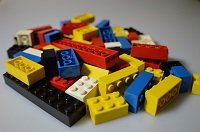 This is the traditional school transplanted to the home. It’s what you generally think of when someone says “school.” Families will select a curriculum that covers all subject areas, often with teacher plans, quizzes, and tests. These families will often have scheduled “school days” and even subject periods. You may hear this referred to as “school in a box.” It provides the generally expected documentation of student achievement with tests and grades. Parents have structured feedback as to whether or not the children or learning. Continue reading
Literature Circles
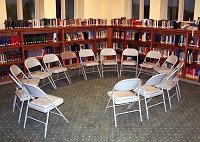 Literature circles can be a useful method for homeschoolers to organize literature discussion groups.
Literature circles are a topic of interest to various literacy educators, and their use has been discussed in a variety of academic journals, conference papers, and workshops. Teachers at all grade levels utilize literature circles as a vehicle through which students learn to: think critically about literature, express their ideas in oral and written forms, and better enjoy their literacy experiences. Continue reading
Fundamental Skills in Science: Observation
 “We value our sight above almost everything else. The reason for this is that of all the senses sight makes knowledge most possible for us and shows us the many differences between things.” Aristotle, “Metaphysics”, Book I
- “You see but you do not observe.” Sherlock Holmes to Dr. Watson in “A scandal in Bohemia” Continue reading
